When it comes to maintaining a commercial or industrial property, most owners and managers focus on what’s happening inside—operations, tenants, equipment, or energy efficiency. The exterior of your building, however, is just as important, and overlooking it can lead to costly surprises. The exterior is the first thing people see. A poorly maintained building sends the wrong message about your business.
The Hidden Dangers of Neglect
Over time, environmental factors such as rain, wind, and temperature fluctuations can cause building materials to deteriorate. Cracks, water ingress, and weather damage may look minor at first glance, but left unchecked, they can quickly escalate. What may begin as a mere hairline crack can expand over time into significant structural damage; in like manner what starts as a small leak can compromise insulation, promote mold growth and drive up eventual repair costs.
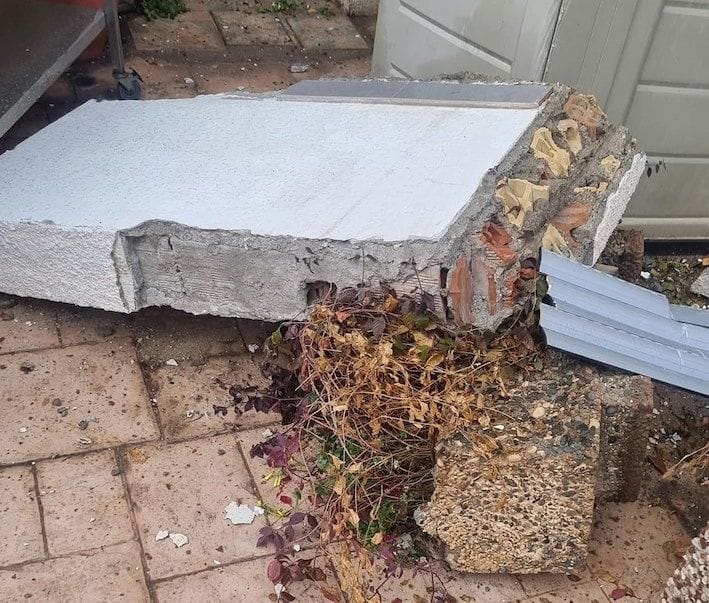
Such damage can result in loose materials, structural weaknesses and deteriorating surfaces that pose safety risks to employees, clients, tenants and passers-by. A recent example of this occurred in Bonn on 17 March, 2025, when heavy, concrete parts of the facade of a commercial building detached from the third floor and fell on two pedestrians, causing them to be taken to the hospital.1 It was eventually determined that long-term water infiltration had weakened the facade materials at a difficult-to-see location on the building exterior.
Such events are not uncommon. In 2024, for example, there were several occurrences: in Hamburg six people were taken to hospital for injuries sustained when a balcony of an apartment building suddenly collapsed, causing them to fall nine meters.2 The age of the building, which was built in the 60s, was possibly a factor in the collapse. In the same year a pedestrian was hospitalised after masonry in the facade of London’s famous “Old Bailey” building fell into the street below.3 The victim was not struck by the falling debris but was injured enough to be taken to hospital by tripping over the facade material where it lay on the ground. Again in 2024, in Limassol, Cyprus, parts of the underside of a residential building balcony broke off and fell onto a private terrace and a popular public walkway.4 In this case no one was injured, however the danger to third parties in all such incidences is only too obvious. A more serious case occurred in the USA in 2022, when a 22-year-old woman was critically injured by a falling piece of building façade in Chicago’s Wicker Park.5 Despite scaffolding being in place, the debris struck her head, demonstrating that even with safety measures, risks remain if the building’s exterior is not properly maintained.
Compliance and Insurance: Why It Matters
Maintaining the exterior of a commercial or industrial building isn’t just about aesthetics or even safety—it’s also a legal and financial necessity in many places.
In Switzerland, for example, building owners are required to comply with various regulations to ensure the safety and integrity of their properties. For instance, The Swiss “Code of Obligations,” Art. 58, states that “the owner of a building or any other structure is liable for any damage caused by defects in its construction or design or by inadequate maintenance.”6 Further, Art 59 of the Swiss CO additionally gives a third party the right to require the owner to avert a danger.
Insurers in Switzerland explicitly warn that they expect owners to maintain property and that foreseeable damage caused by neglect is not covered. Some insurers’ guidance, for example, explain that failing to perform ordinary maintenance (or ignoring known defects) can lead insurers to reduce or refuse payouts; cantonal natural-hazard pools and insurers also exclude damage resulting from “inadequate maintenance” in certain contexts.7
A start to the solution: periodic inspections
Periodic exterior inspections are essential for protecting your investment, ensuring safety, and avoiding unnecessary expenses down the road. Regularity in such inspections can identify potential hazards before they lead to accidents.
Not all inspections are equally valuable, however. Traditional inspection methods have relied upon observations from the ground, which are unlikely to see small defects before they become real problems, or by use of scaffolding, which is expensive, time consuming and imprecise. Using scaffolding is not without its own dangers, as well, for example in 2025 a scaffolding collapse in Lausanne, Switzerland, resulted in the deaths of three workers and injuries to several others.8
Building owners and managers today have better options. Employing advanced technologies, such as drone imaging and AI analysis, rapid, inexpensive and above all comprehensive assessments without the need for potentially dangerous scaffolding or ladders can be performed. Such inspections can easily detect issues like loose masonry, cracks, and water ingress no matter how high or difficult to approach their locations may be, enabling timely recognition of dangers, and consequently, timely repairs.
Additionally, this type of modern inspection creates a precise location-specific record of defects that can be used not only to drive repairs but to monitor the quality of those repairs over time, assuming that subsequent periodic inspections are carried out. Clear, detailed interactive reports can be produced for building owners or managers so that they can easily understand the state of their building’s facade at a given moment and to take note of any repairs that are degrading over time (again, if follow-up, periodic inspections are done).
Conclusion
Neglecting the exterior of your commercial or industrial building can have dire consequences. Periodic inspections are essential to ensure the safety of all who interact with your property. By investing in proactive maintenance and ensuring compliance with government regulations and insurance requirements, you protect lives, preserve your investment, and uphold your reputation.
The author is a Swiss BAZL and US FAA licensed commercial drone pilot and CAT 1 Infrared Thermographer, and has the BET Level 1 certification from the Building Envelope Sciences Institute.
Parhelion can help transform your building’s future
The Swiss-registered firm Parhelion Aerospace GmbH and the American firm Inspekt AI, working together are able to effectively and efficiently achieve this level of aerial inspections service.
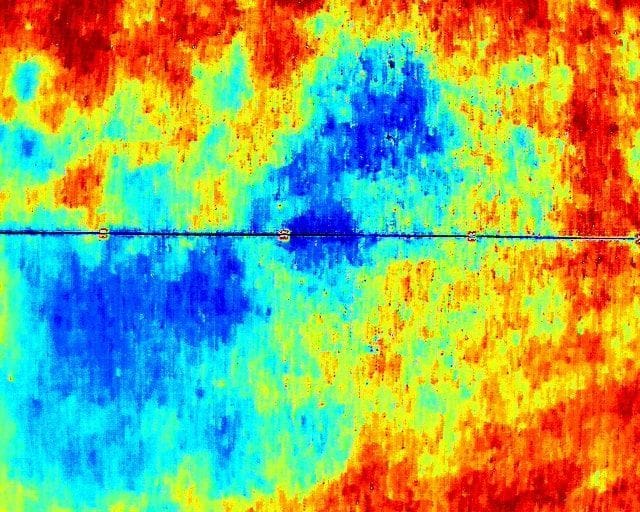
Using modern, sophisticated and safe drones, Parhelion captures both visual and thermal infrared imagery of your building’s facades and roof. Inspekt AI thereafter employs its proprietary AI program, adept at coordinating thousands of images, to conduct a thorough defects analysis. Inspekt AI then stores the results in a dedicated client-accessible online account that permits owners and managers to examine their building’s condition, and also to monitor it over time if inspections are repeated. This innovative approach guarantees comprehensive and precise results, providing definitive insights that serve as a reliable guide for effective repairs that protect your building and transform its future.
In the same inspection we can also examine your building for energy inefficiencies and greenhouse gas emissions. Energy losses and emissions are signs of a leaky (and unnecessarily expensive) building envelope.
To schedule a modern, 21st-century inspection of your building, feel free to contact Parhelion or Inspekt AI. We are committed to working with you to meet your inspection needs.
References:
1. The Munich Eye (17 March, 2025): Major Incident in Bonn: Façade Collapse Injures Two Seriously
2. Spiegel Panorama: (15.08.2024): Balkon bricht ab – mehrere Verletzte
3. Evening Standard (12 January, 2024): Pedestrian injured after masonry falls from historic Old Bailey court entrance
4. Cyprus Mail (26 January, 2024): Another balcony collapses in Limassol
5. Gainsberg Law PC (7 April, 2022): Falling Building Debris Leaves Wicker Park Woman in Critical Condition.
6. Art. 58, 59 Swiss Code of Obligations (owner liability)
7. Allianz Schweiz: Wasserschaden: Was ist versichert?
8. SWI swissinfo.ch (13 July 2024): Three dead after building site accident in Lausanne